
Travertine is a natural stone valued for its earthy colours, distinctive patterns, and timeless appeal. It is widely used in bathrooms, patios, pool surrounds, and other architectural applications.
Understanding the difference between filled and unfilled travertine helps you choose a surface that suits your design preferences, maintenance expectations, and installation requirements. Filled travertine generally offers a more uniform surface that is easier to clean, while unfilled travertine preserves the stone’s natural cavities for a more rustic appearance.
In this guide, we will explore the difference between filled and unfilled travertine, examine their advantages and disadvantages, compare their suitability for flooring and outdoor patios, and explain how to choose and maintain the right option for your space.
What Is Filled Travertine?
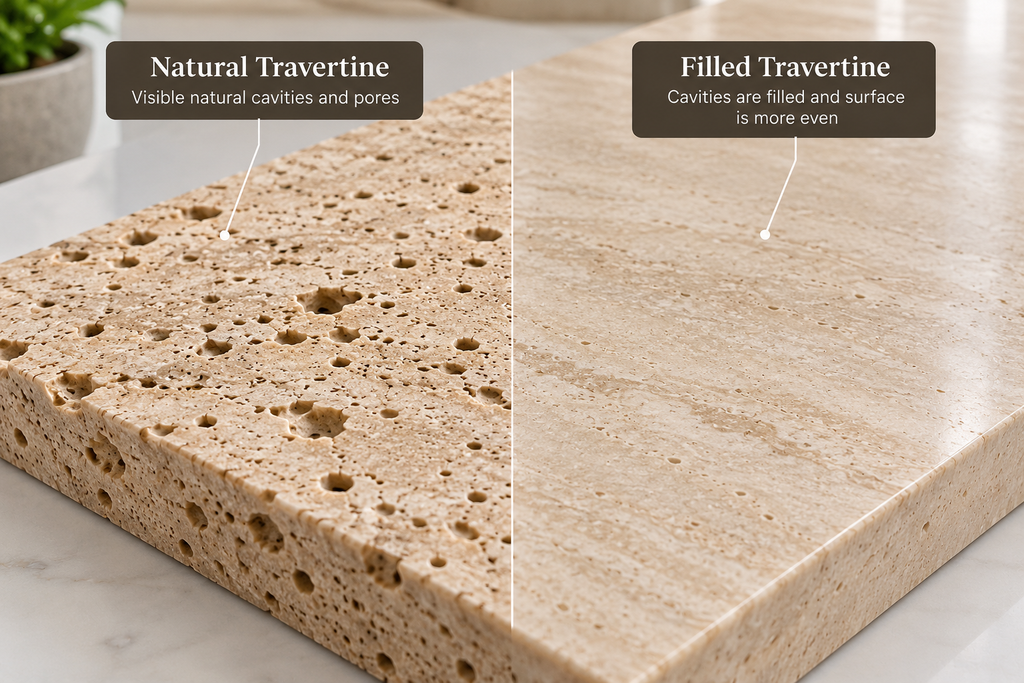
Filled travertine is natural travertine stone whose visible surface cavities have been filled with a suitable material, such as cement-based filler or resin. After filling, the surface is typically ground or honed to create a more even appearance.
This process does not change the stone’s natural origin. Instead, it modifies its surface to make it more uniform and practical for particular applications.
Filled travertine is commonly used for:
- Hallways and interior walkways
- Bathroom walls
- Interior staircases
- Selected commercial interiors and hospitality spaces
What Is Unfilled Travertine?
Unfilled travertine is stone in which the visible natural cavities are intentionally left open. Unlike filled travertine, unfilled travertine retains its naturally pitted appearance. Depending on the stone and finish, the surface may feel rougher and look more rustic.
Unfilled travertine is often selected for:
- Outdoor patios and terraces
- Garden pathways and courtyards
- Pool surrounds and selected poolside paving
- Exterior walls and architectural features
- Rustic-style interiors and feature walls
Difference Between Filled and Unfilled Travertine
| Feature | Filled travertine | Unfilled travertine |
| Surface | More uniform, with accessible cavities filled | Natural cavities remain open |
| Appearance | Usually cleaner and more consistent | Rustic and naturally textured |
| Cleaning | Generally easier for routine sweeping and mopping | May require brushing to remove debris |
| Maintenance | Filler may need occasional repair | Open pores need regular cleaning |
| Design style | Contemporary, classic, and refined | Rustic, Mediterranean, and organic |
| Indoor flooring | Often practical | Suitable when texture and maintenance are acceptable |
| Outdoor patios | Depends on filler, finish, and climate | Often chosen for textured outdoor designs |
| Wet-area suitability | Depends on tested slip resistance | Depends on tested slip resistance |
| Repair considerations | Filler can loosen and require patching | Surface cavities remain open; stone damage can still occur |
| Sealing | Often recommended | Often recommended |
Pros and Cons of Filled Travertine vs Unfilled Travertine
Filled Travertine: Pros and Cons
Pros
- Easier to clean in many indoor applications.
- More uniform surface and visual appearance.
- Suitable for many living spaces, hallways, and commercial interiors.
- Can be finished to achieve a honed or polished look, depending on the material.
Cons
- Filling and finishing may increase initial costs.
- Filler can loosen or become discoloured.
- Repairs may be needed in high-traffic areas.
- The finished surface may look less rustic than unfilled stone.
Unfilled Travertine: Pros and Cons
Pros
- Preserves the natural pits and character of the stone.
- Well suited to rustic and traditional design schemes.
- Avoids deterioration of factory-applied cavity filler because no filler is present in those cavities.
- Can be appropriate for selected exterior paving and landscaping projects.
Cons
- Open pores can collect dirt and debris.
- Cleaning may take more effort.
- Suitability for wet or cold environments must be evaluated carefully.
- Uneven cavities may not be desirable for every flooring application.
Filled vs Unfilled Travertine for Flooring
Flooring decisions should account for daily use, cleaning methods, surface traction, and the appearance you want to maintain over time.
Is Filled Travertine Better for Indoor Floors?
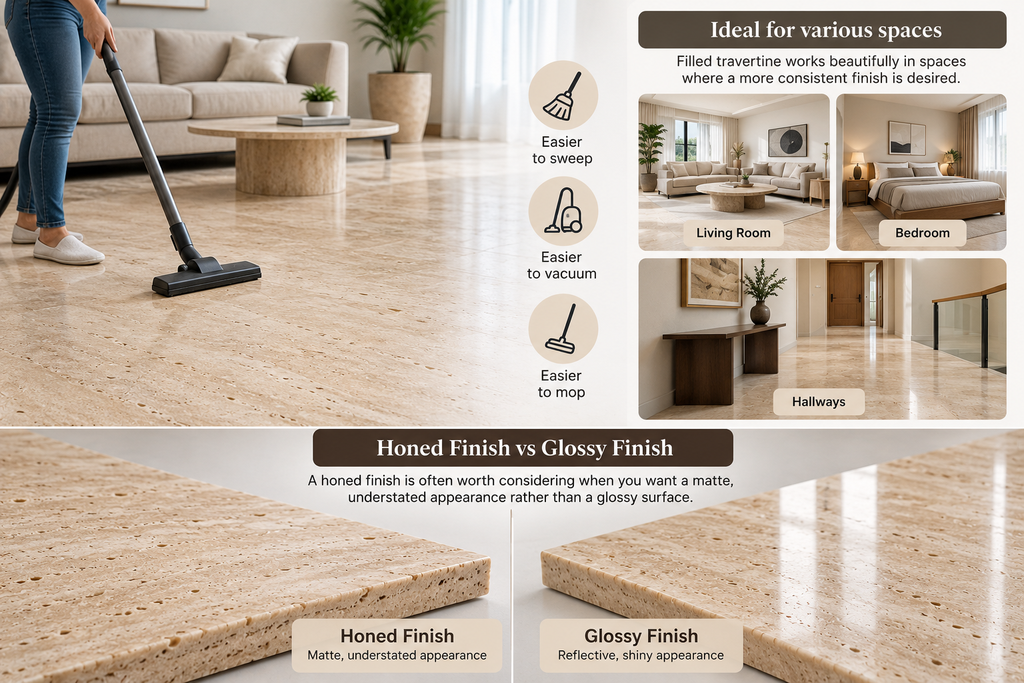
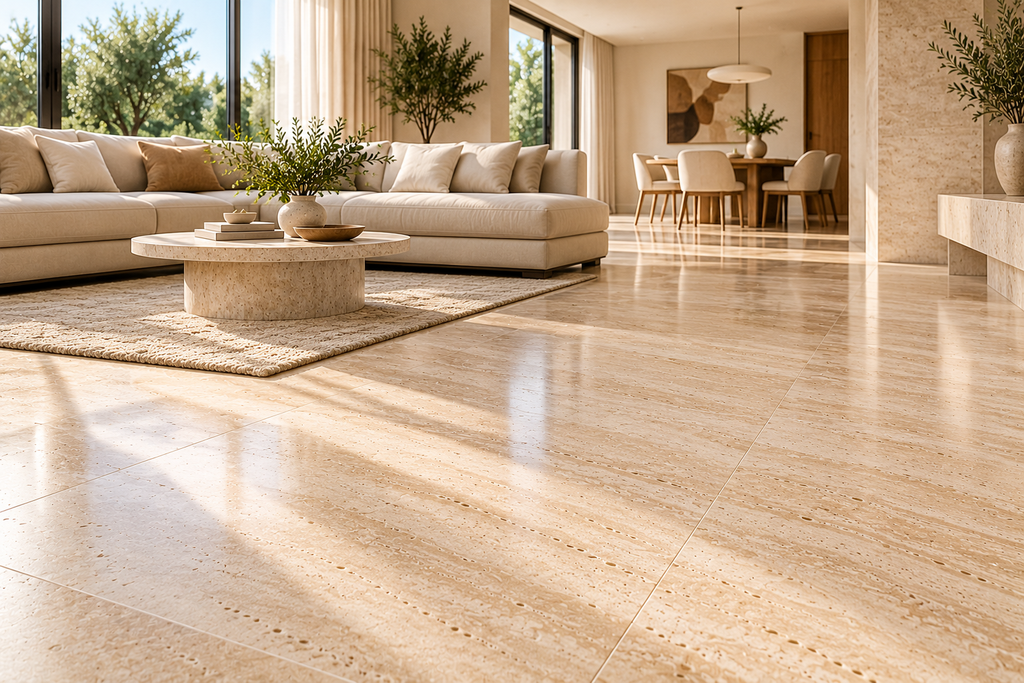
For many indoor floors, filled travertine is a practical choice because its flatter surface is easier to sweep, vacuum, and mop. It is particularly attractive in living rooms, bedrooms, hallways, and spaces where a more consistent finish is desired.
A honed finish is often worth considering when you want a matte, understated appearance rather than a glossy surface.
However, the word filled alone does not determine whether a floor is appropriate. In a bathroom or another wet area, confirm the product’s slip resistance under the expected conditions. A smooth or polished surface can become slippery when wet, regardless of whether its pores are filled.
Is Unfilled Travertine Suitable for Indoor Flooring?
Unfilled travertine can be used indoors when its texture, maintenance requirements, and installation details suit the space.
It may be a good fit for rustic kitchens, feature areas, or interiors designed around natural materials. However, open cavities can collect dust, crumbs, and other debris, especially in high-use areas.
Before choosing unfilled stone for an indoor floor, ask yourself:
- Will the open pores make daily cleaning inconvenient?
- Will furniture, footwear, or wheeled items place concentrated loads on the surface?
- Is the stone appropriate for the expected traffic?
- Can the cleaning routine accommodate its texture?
Tip: If easy maintenance is your main priority, filled travertine is generally the more convenient starting point.
Filled vs Unfilled Travertine for Outdoor Patios
Outdoor patios have different requirements from indoor floors. Rainfall, direct sunlight, temperature changes, standing water, and outdoor debris can influence how natural stone performs.
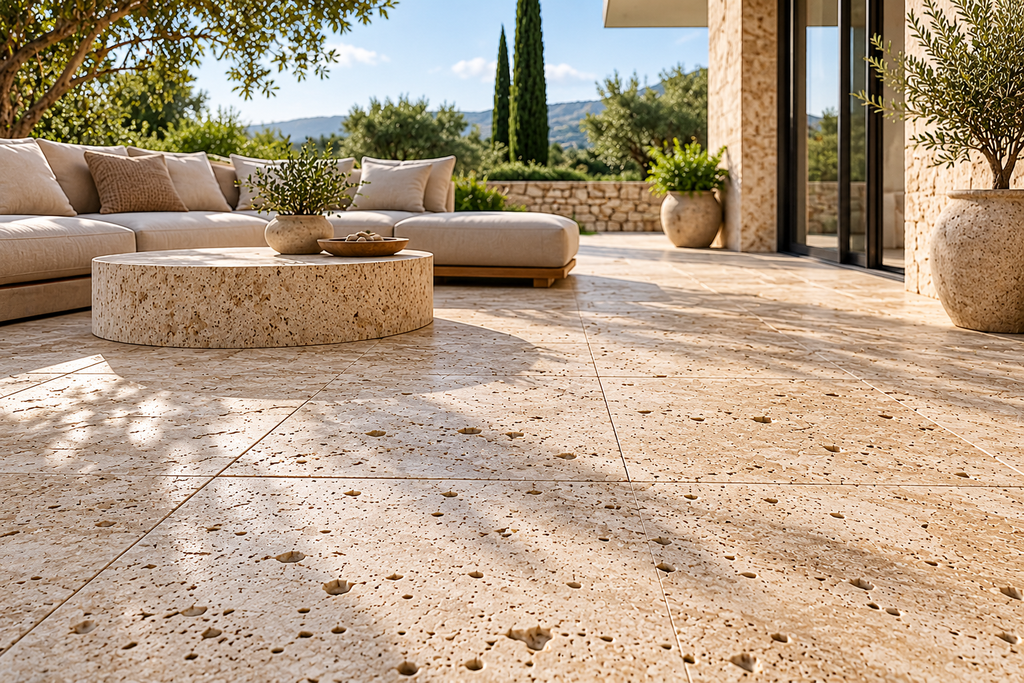
Unfilled travertine is a popular choice for rustic patios because its open cavities and textured finishes preserve a natural appearance. However, a successful installation depends on selecting the right stone and finish for the climate, drainage conditions, and intended use.
Is Unfilled Travertine Better for Outdoor Patios?
Unfilled travertine can be an excellent option for outdoor patios when the specific product is designed for exterior use.
Its advantages include:
- A naturally textured appearance that complements gardens and outdoor living spaces.
- Compatibility with rustic and Mediterranean-inspired landscaping.
- No surface filler in the open cavities to erode or become dislodged.
- Availability in finishes that may provide suitable traction when correctly specified.
Can Filled Travertine Be Used for Outdoor Patios?
Sometimes, yes. Filled travertine is not automatically unsuitable for outdoor use. Its suitability depends on the filling material, the stone’s technical characteristics, the climate, and the installation method.
For example: Resin-filled products may be unsuitable for some exterior environments because certain resins can discolour or deteriorate with prolonged exposure. Cement-filled or unfilled products may be more appropriate in those situations, but the manufacturer’s specifications should determine the final choice.
In climates with freezing temperatures, water trapped in pores can also contribute to damage during freeze-thaw cycles. Confirm that the selected product and installation system are rated for those conditions.
Filled vs Unfilled Travertine Around Swimming Pools
Pool surrounds require particular attention because people walk barefoot on wet surfaces.
When selecting travertine for a pool area, consider:
- Slip resistance under wet conditions.
- Surface temperature in direct sunlight.
- Water drainage and the risk of standing water.
- Resistance to pool chemicals and cleaning products.
- Comfort underfoot and the suitability of edges or coping.
- Maintenance requirements in a frequently wet environment.
A textured, tumbled travertine finish is often considered for pool surrounds, but unfilled pores alone do not guarantee safe traction. Ask the supplier for suitable slip-resistance test data for the intended application and confirm compliance with relevant local requirements.
How Much Does Filled vs Unfilled Travertine Cost?
The cost of filled versus unfilled travertine depends on the stone’s origin, grade, colour, thickness, dimensions, finish, filling material, and supplier. Installation costs also vary according to site preparation and the complexity of the project.
Filled travertine may cost more because of additional filling and finishing work. However, some unfilled products can also command premium prices because of their source, texture, selection, or finish.
Rather than assuming one option is always cheaper, compare the complete project cost.
| Cost factor | What to check |
| Material price | Cost per square foot or square metre for comparable stone |
| Filling and finishing | Whether filling is included in the quoted price |
| Installation | Labour, substrate preparation, and laying method |
| Grouting | Joint width, grout type, and finishing requirements |
| Sealing | Suitable sealer, application labour, and future maintenance |
| Repairs | Potential filler repairs or restoration work |
| Waste allowance | Additional material needed for cutting and breakage |
How to Compare Quotes Accurately
Request quotations for the same stone variety, thickness, dimensions, finish, and quantity. Confirm whether the price includes filling, sealing, installation, grout, and taxes.
Also ask about recommended maintenance and repair procedures. A lower initial material price may not represent better long-term value if the surface requires more intensive cleaning or the installation is poorly suited to its environment.
Avoid publishing fixed prices unless they have been verified for the target market and clearly identify the date, currency, and whether they cover material only or the installed project.
How to Clean, Seal, and Maintain Filled and Unfilled Travertine
Travertine is a calcium-carbonate-based natural stone. It can be sensitive to acidic substances, including vinegar and lemon juice, which may etch the surface. Filling the pores does not eliminate this chemical sensitivity.
Routine Cleaning for Filled Travertine
For everyday maintenance:
- Sweep or dust-mop the floor to remove abrasive grit.
- Use a cleaner formulated for natural stone or another supplier-approved, pH-neutral cleaning product.
- Mop with a clean, well-wrung mop rather than leaving excessive water on the surface.
- Rinse away cleaning residue when recommended by the product instructions.
- Wipe up spills promptly to reduce the risk of staining.
Inspect high-traffic areas periodically for missing filler, small pits, or changes in surface appearance. Have damaged areas repaired with a compatible filler where necessary.
Routine Cleaning for Unfilled Travertine
Unfilled travertine needs additional attention because debris can collect inside its open cavities.
For routine care:
- Sweep away leaves, dust, sand, and loose debris.
- Use a soft brush and a suitable stone cleaner to clean the cavities.
- Rinse according to the cleaner’s instructions without directing excessive water into vulnerable joints.
- Ensure the area drains properly and does not remain persistently wet.
- Inspect the surface for algae, discolouration, loose material, or deterioration.
For exterior installations, cleaning frequency will depend on rainfall, shade, nearby vegetation, and foot traffic.
Does Filled or Unfilled Travertine Need Sealing?
Both filled and unfilled travertine may benefit from a suitable penetrating or impregnating sealer, depending on the specific stone and installation. Filling is not a substitute for sealing, and sealing does not make the stone completely waterproof or stain-proof.
The correct procedure is to:
- Confirm whether the stone needs sealing with the supplier.
- Choose a product compatible with the stone, filler, and finish.
- Test the sealer on a small, inconspicuous area.
- Follow the manufacturer’s application and curing instructions.
- Reassess the need for resealing based on wear and product guidance rather than relying on a universal schedule.
Important: Avoid vinegar, lemon-based cleaners, and other acidic products on travertine. Use only cleaning chemicals confirmed as suitable for the stone and its sealer.
For stubborn stains or significant damage, consult a stone-care professional rather than experimenting with aggressive household chemicals.
How to Choose Between Filled and Unfilled Travertine
The best option is the one that meets your project’s functional requirements while delivering the appearance you want.
Choose filled travertine when:
- You prefer a flatter, more uniform surface.
- Easy routine cleaning is a priority.
- You want a refined appearance for indoor flooring.
- You are prepared to inspect and repair filler when necessary.
Consider unfilled travertine when:
- You want a naturally pitted, rustic appearance.
- You are designing a suitable patio, pathway, or exterior feature.
- You accept the additional cleaning associated with open cavities.
- The stone and finish meet the technical requirements of the site.
A Practical Pre-Purchase Checklist
Before committing to either option, request a sample and confirm the following with your stone supplier:
- Is the material filled, unfilled, or partially filled?
- What filling compound has been used?
- Is the surface honed, polished, brushed, or tumbled?
- Is the product rated for the intended indoor or outdoor application?
- What are its absorption and slip-resistance characteristics?
- Does it require sealing before or after installation?
- How can missing filler or newly exposed cavities be repaired?
- What cleaning products and maintenance methods are recommended?
Frequently Asked Questions About Filled vs Unfilled Travertine
What is the main difference between filled and unfilled travertine?
Filled travertine has accessible surface cavities filled with cement-based material or resin to create a more even surface. Unfilled travertine retains those cavities, producing a more visibly textured and rustic appearance.
Which is better, filled or unfilled travertine?
Filled travertine is often more convenient for indoor flooring because its flatter surface is easier to clean. Unfilled travertine is frequently selected for rustic outdoor paving and landscaping. The best choice depends on the finish, climate, maintenance requirements, and intended application.
Is filled travertine better for flooring?
For many indoor flooring projects, filled travertine is a practical choice because fewer open cavities collect dirt. However, stone quality, finish, installation, and slip resistance remain important, especially in bathrooms and other wet areas.
Is unfilled travertine suitable for outdoor patios?
Yes, unfilled travertine can be suitable for patios when the stone, thickness, finish, and installation are appropriate for the local climate. Good drainage and regular cleaning are important for maintaining its appearance.
Does filled travertine need sealing?
It may. Filling closes accessible cavities but does not eliminate the natural stone’s porosity. Consult the stone supplier and sealer manufacturer to determine whether sealing is recommended.
Is unfilled travertine more slippery when wet?
Not necessarily. Slip resistance depends on the surface finish, texture, contaminants, and wet conditions. An unfilled surface is not automatically safer than a filled one, so select a product with suitable test data for its intended use.
Can filled travertine develop holes over time?
Yes. Small cavities can become exposed as thin layers of stone wear or fracture, and existing filler may loosen. These areas can often be repaired by a stone professional using a compatible filling compound.
Is unfilled travertine cheaper than filled travertine?
Not always. Unfilled travertine may avoid some filling and finishing costs, but the stone’s origin, quality, dimensions, and surface treatment can influence its price. Compare equivalent products and complete installation quotes.
What is the difference between filled, honed, and tumbled travertine?
These terms describe different characteristics. Filled refers to the treatment of surface cavities. Honed describes a smooth, typically matte finish, while tumbled describes a weathered appearance with softened edges and a textured surface. A tile can be both filled and honed, or unfilled and tumbled.
Can unfilled travertine be filled after installation?
In many cases, yes. A suitable filler or grout can be used to fill accessible cavities, depending on the stone, installation, and desired finish. A qualified installer should assess the surface and recommend a compatible material.
Conclusion: Filled vs Unfilled Travertine — Which Should You Choose?
When comparing filled vs unfilled travertine, the most important consideration is how the stone will look, perform, and be maintained in its intended environment.
Filled travertine is often the practical choice for indoor floors where a more uniform surface and straightforward cleaning are priorities. Unfilled travertine is ideal for projects where natural texture and rustic character are central to the design, including suitable patios, garden pathways, and exterior features.
Looking for travertine for flooring, patios, or other architectural applications? Explore available travertine collections, compare surface finishes, and consult a natural stone specialist to identify the right option for your project.
Call to action: Browse our travertine collection or contact our RRM team for guidance on selecting natural stone that suits your design, application, and maintenance requirements.