
A guest starts judging a hotel at the entrance, well before reaching the reception desk. The floor, the walls and the way light moves across them shape that judgment, and marble handles this moment better than most materials. It reflects light, feels cool underfoot, and carries natural veining that no printed surface can copy.
Choosing marble is only the first decision. Architects, interior designers and hotel developers still have to settle the stone, the finish, the layout and the source. A dependable luxury marble supplier in India helps with all four. This guide covers how luxury marble changes lobbies, corridors, reception areas and other high-end hospitality spaces, and what to check before you place an order.
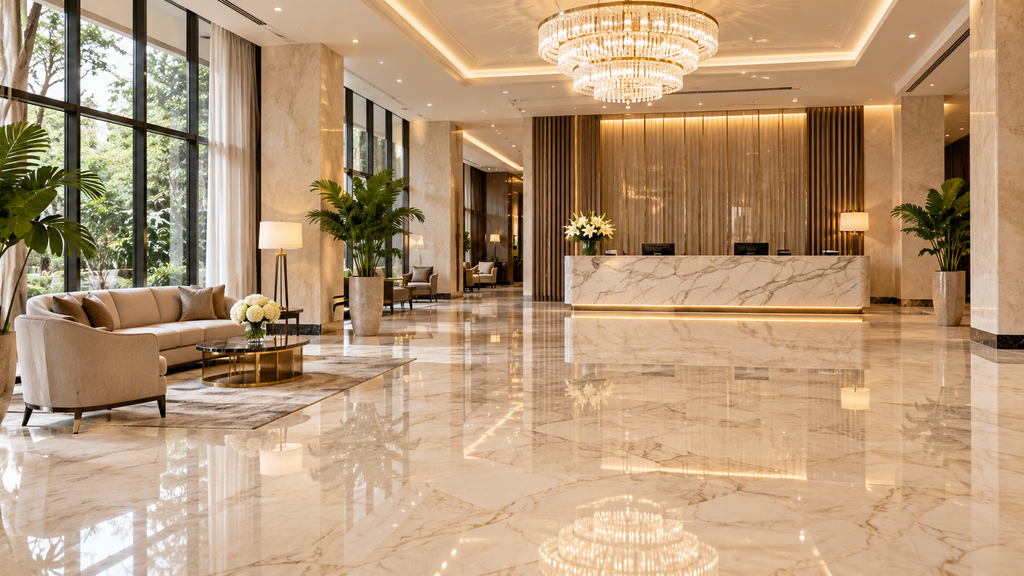
1. Why the lobby sets the standard for the whole hotel
The lobby is the only space every guest passes through, so it carries more of the hotel’s identity than any single room. Its floor is also the largest continuous surface in the building. Polished marble spreads light across that surface, makes a double-height space feel taller and a narrow entrance feel wider, and reduces the number of fittings needed to keep the area bright.
Natural veining adds variety that other materials lack, since two lobbies built from the same stone family still look different once the slabs are laid. Marble also lasts. Worn polish can be restored on site without replacing the floor, which suits owners planning for decades. When hotel teams shortlist luxury marble slabs India offers, the lobby is usually the first space they plan, because every other material is chosen to sit beside it.
2. Luxury marble flooring designs for lobbies and corridors
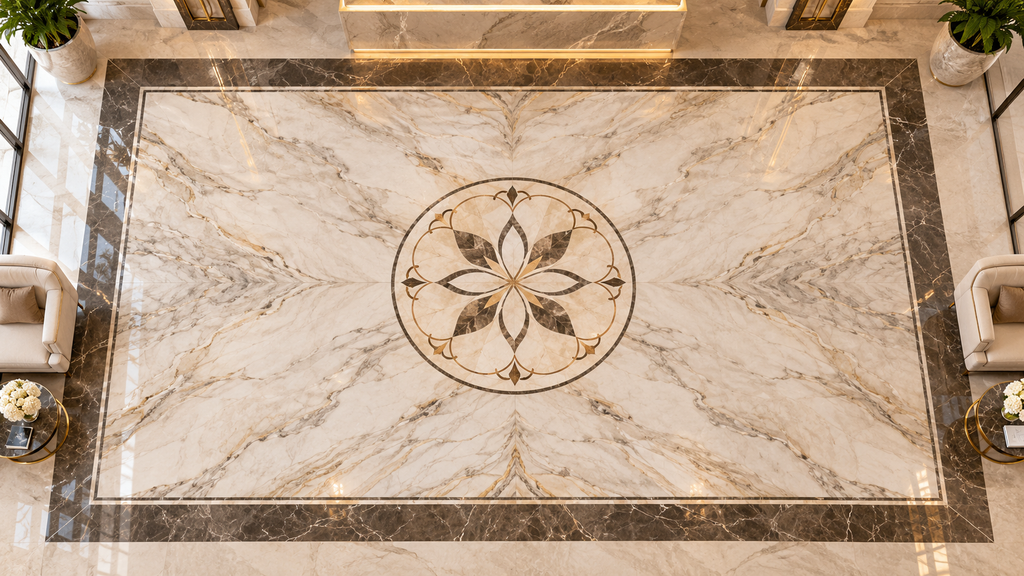
Layout does as much work as the stone. A few luxury marble flooring designs appear again and again in hospitality projects because they solve real problems.
• Large-format slabs with tight joints give a calm, continuous floor that suits modern lobbies.
• Bookmatched slabs along the entrance axis create symmetry and draw the eye to the reception desk.
• Contrasting borders and waterjet-cut medallions define a seating zone or sit beneath a central chandelier.
• Linear stripes in corridors lead guests toward lifts and restaurants without extra signage.
Finish needs the same attention. A high polish suits the lobby centre, where traffic is steady and spills are cleaned fast. Near entrances, pool decks and washrooms, a honed or lightly textured finish gives better grip when the floor is wet. Many designers use both finishes in one scheme, cut from the same stone so the colour stays consistent.
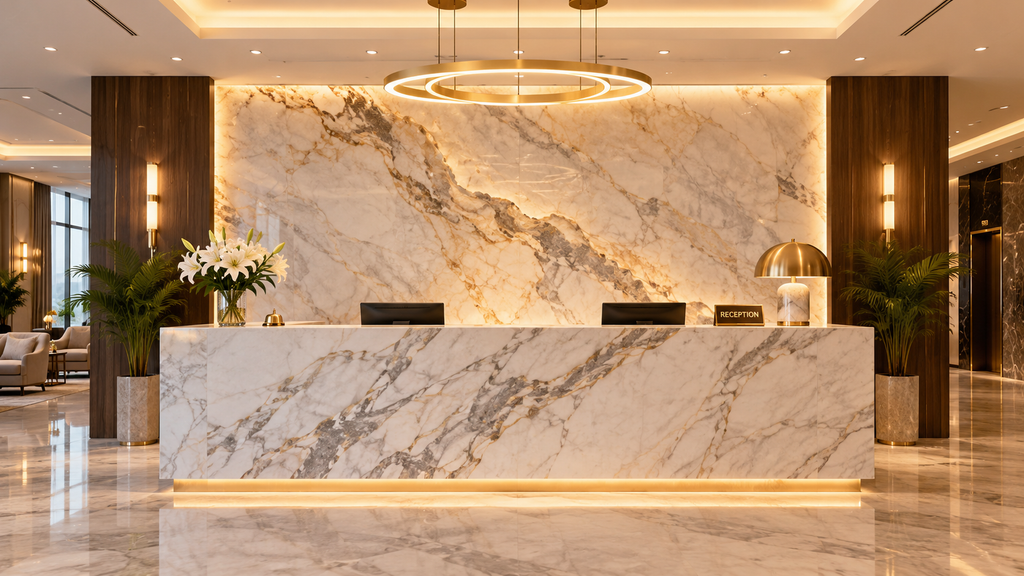
3. Walls, reception desks and feature surfaces
Floors get the attention, but vertical surfaces finish the effect. Marble cladding behind the reception desk gives arriving guests a point to focus on. Bookmatched wall panels turn the veining into a pattern that reads almost like artwork, and the effect works from across a large atrium.
Other surfaces carry the same stone through the building. Lift lobbies, column wraps, staircase treads, bar fronts and guest washroom counters all benefit from a matching material, which ties separate areas into one scheme. Translucent stones such as onyx can be backlit for a glowing feature wall at a lounge or spa entrance, while a quieter marble suits the corridors beyond.
The practical rule is restraint. One dramatic stone on a feature wall, supported by a calmer stone on the floor, usually looks more refined than three bold stones competing in the same room.
4. Choosing slabs that survive heavy hospitality use
A hotel lobby sees luggage wheels, wet shoes, spilled drinks and cleaning chemicals every day. Marble handles this well when the choice and the care are right.
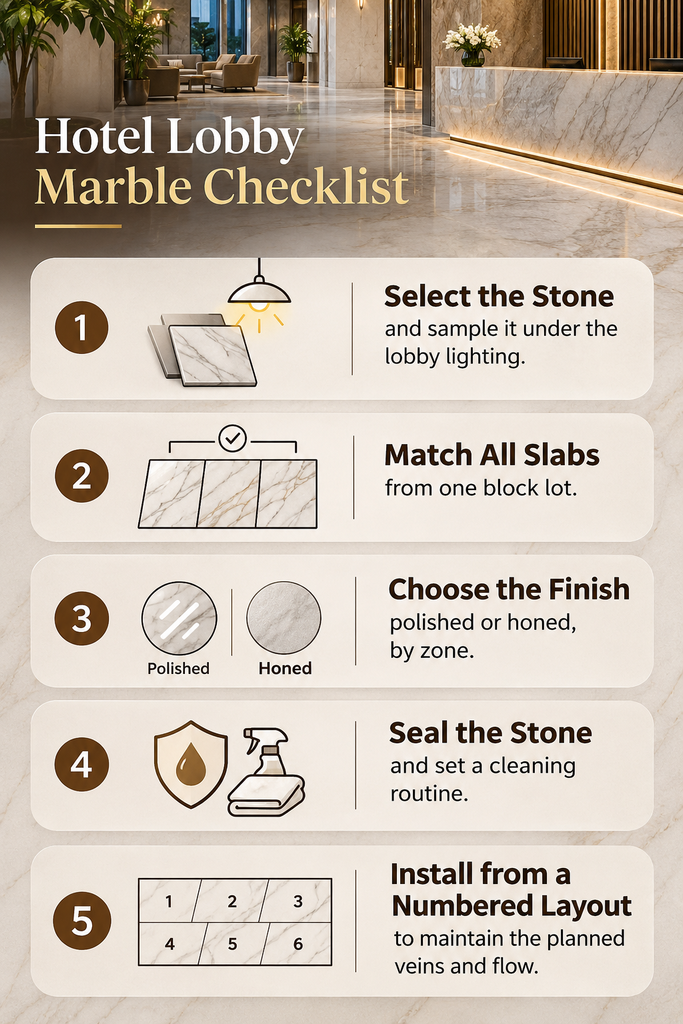
Start with the stone. Marble is a calcium-based rock, so acidic liquids such as citrus juice, wine and some cleaners can dull the surface. Sealing the slabs and using pH-neutral cleaners protects the finish. Ask the supplier how each stone behaves in high-traffic areas, and test a sample with the products your housekeeping team uses.
Next, check consistency. Slabs for one lobby should come from the same block lot so colour and veining match across the floor. Inspect each slab for fissures and repaired areas before cutting, and lay the pieces out dry to confirm the pattern.
Finally, plan upkeep. Entrance mats stop grit from scratching the polish, daily dust mopping keeps the surface clean, and scheduled polishing restores the shine before wear shows.
5. Planning and sourcing with an imported luxury marble supplier
The strongest hospitality projects settle sourcing early. Imported luxury marble slabs from Italy, Spain, Turkey and Greece offer the veining and tone range that many hotel briefs ask for, and RRM Marbles imports directly from quarries in these regions. A premium luxury marble collection lets designers compare several stones side by side before committing, which avoids changes during construction.
A practical sequence looks like this:
- Share the drawings, floor areas and design brief with the supplier.
- Shortlist stones and approve samples under the lobby’s actual lighting.
- Select full slabs, then prepare a numbered layout so the pattern runs as planned.
- Cut borders, medallions and matched panels with CNC and waterjet equipment.
- Deliver to site and install with experienced artisans.
Working with one supplier from selection to installation keeps responsibility clear when a question comes up on site. You can view the stones available for hospitality projects on the RRM Marbles page.
Conclusion
Luxury marble gives a hotel lobby light, scale, and character that guests notice without being told where to look. The result depends on decisions made early: the right stone, a layout suited to each zone, a finish matched to traffic, and slabs selected as one consistent lot. A trusted luxury marble supplier in India supports each of those steps. To explore imported options for your next hospitality project, visit the RRM Marbles page and send your brief to the team.
FAQ
Which marble is best for a hotel lobby?
It depends on traffic, lighting and the design brief. Light stones with soft veining read as bright and open, while darker stones suit lounges. Always view samples under the lobby’s own lighting.
Is polished marble too slippery for hotels?
Polished marble can be slick when wet. Use a honed or lightly textured finish at entrances, pool areas and washrooms, and keep mats at doors.
How do you maintain marble floors in a busy hotel?
Dust mop daily, clean with a pH-neutral product, wipe spills quickly, and schedule sealing and polishing so wear never builds up.
Can marble be used on lobby walls and reception desks?
Yes. Slabs and bookmatched panels work well on feature walls, desk fronts, columns and lift surrounds, and they pair naturally with a marble floor.
How thick should lobby marble slabs be?
Floor slabs are usually thicker than wall cladding. Confirm the exact thickness with your structural consultant and fabricator, based on the substrate and the load.
How do you keep colour consistent across a large lobby?
Select every slab from the same block lot, lay the pieces out dry before installation, and number them so the pattern runs in sequence.
What does a luxury marble supplier in India offer beyond slabs?
A good supplier helps with stone selection and samples, cuts borders and inlays, arranges delivery, and supports installation on site.
How do I start a hotel marble project?
Share your drawings and areas, shortlist stones from the imported marble page, view full slabs, and approve a sample before ordering.